
Here is a video of the mechanism assembly
The SUNDIY mechanism can be installed on any type of solid support:
- wood,
- aluminium,
- steel,
- wrought iron,
- concrete,
- masonry,
- any rigid support, etc
For all types of uses, such as a bioclimatic pergola or an adjustable louvre sunshade.
The mechanism consists of a left-hand part and a right-hand part, mirror images of each other. Start with either the left-hand or right-hand line.
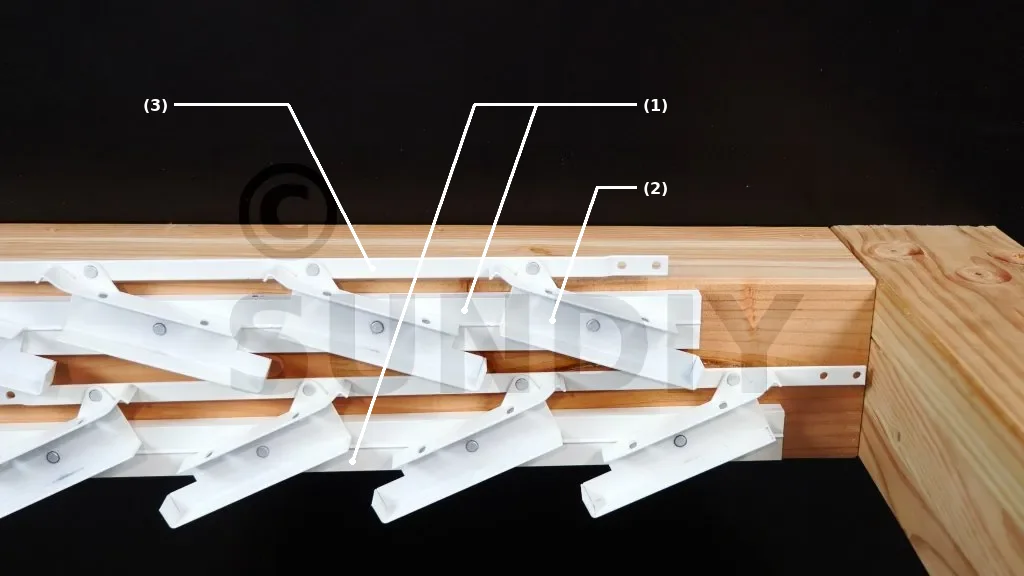
- (1) Main body
- (2) Blade carrier
- (3) Connecting rod
The mechanism consists of a left-hand part and a right-hand part, symmetrical to each other.
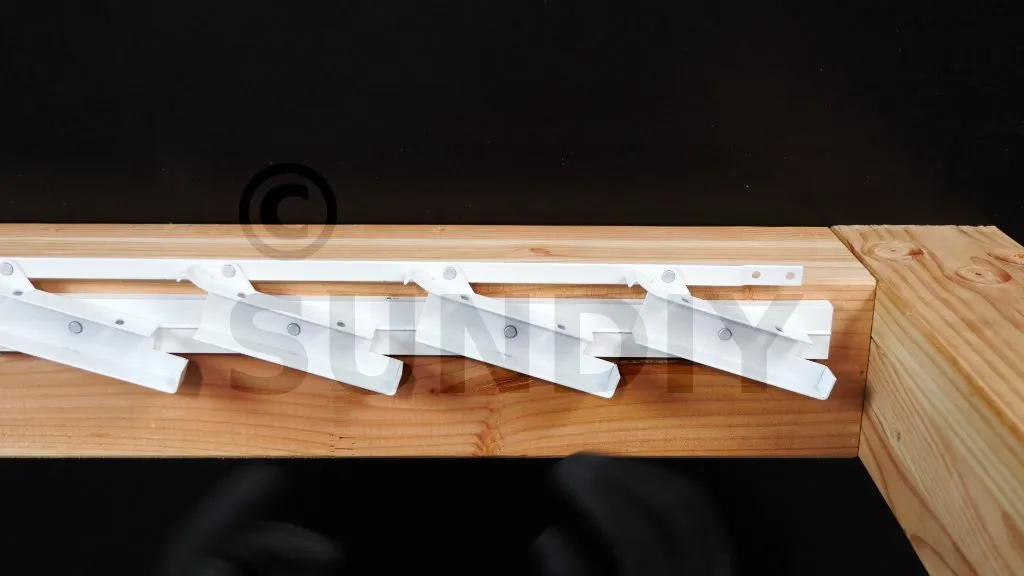
Anything is possible. But for a bioclimatic pergola, the standard orientation is the one shown above, which allows precise adjustment of the amount of light as well as optimal ventilation even in the open position.
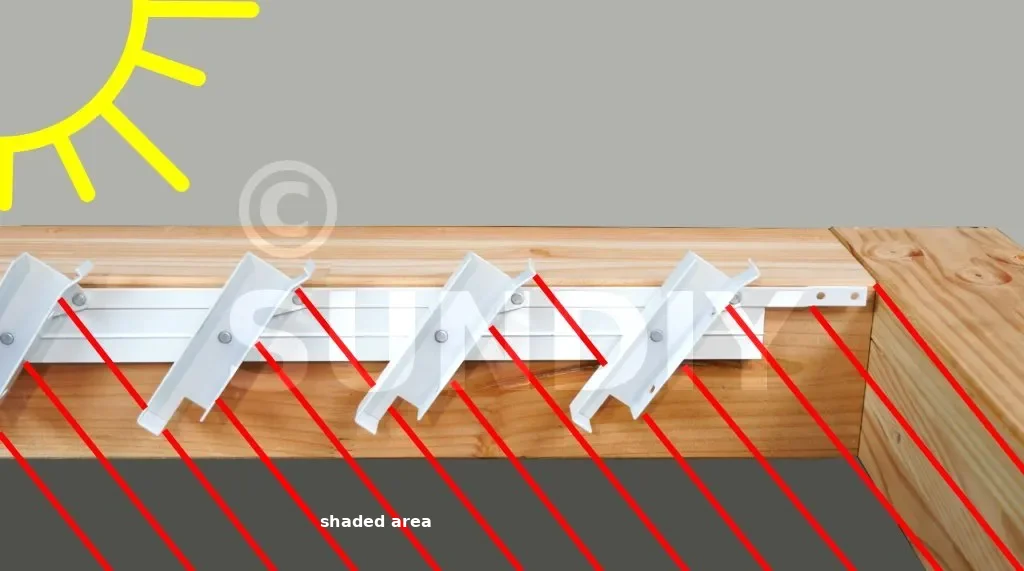
In summer, at peak sunshine, the sun is at its zenith. The rays are stopped by the blades. The pergola creates shade. But the blades in the open position allow good ventilation.
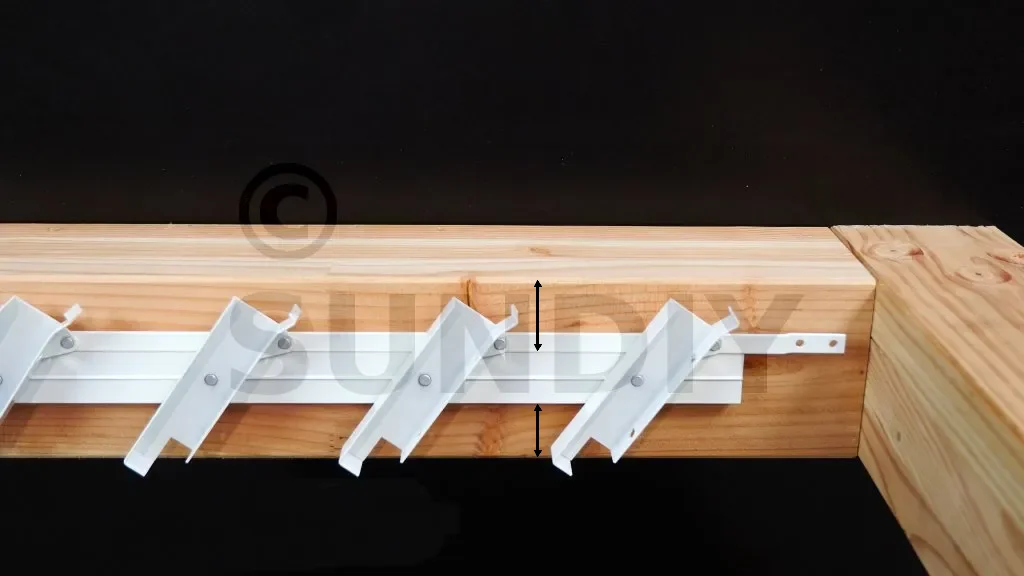
Vertical positioning of the mechanism
On a beam mainly depends on the type of actuation chosen:
- with the Blade Driver rod-operated system, anything is possible: high, middle, low.
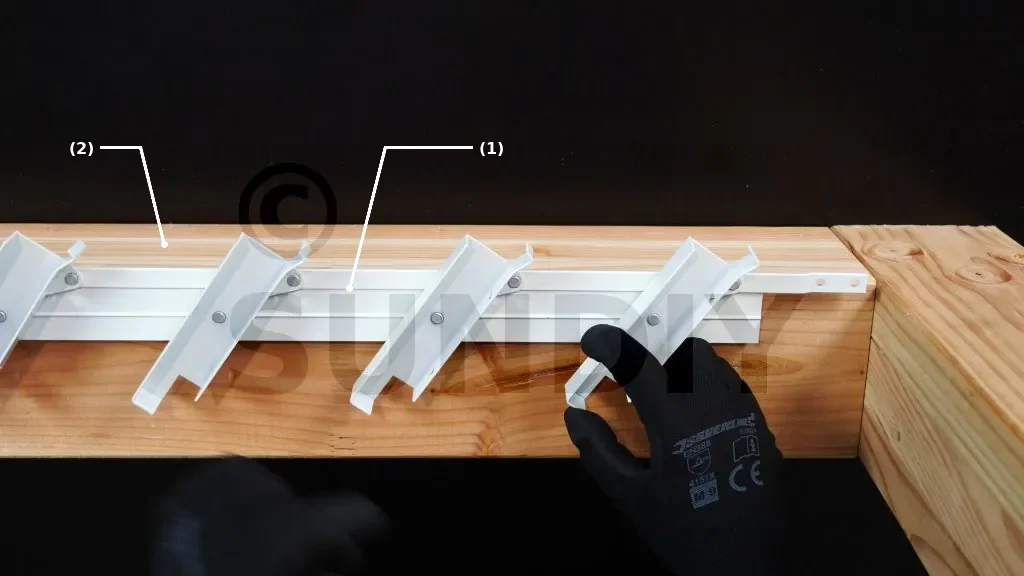
- with SMART motorisation, the mechanism must be fixed in the upper position, the upper edge of the body (1) flush with the top face of the beam (2).
- with the Blade Runner universal-joint actuator, the mechanism is fixed in the upper position but can be located up to 10mm below the top face of the beam.
- also suitable for Blade Driver rod actuation.
- with SMART-i concealed motorisation, the mechanism is in the intermediate position. Refer to the SMART-i installation instructions.
- also suitable for Blade Driver rod actuation.
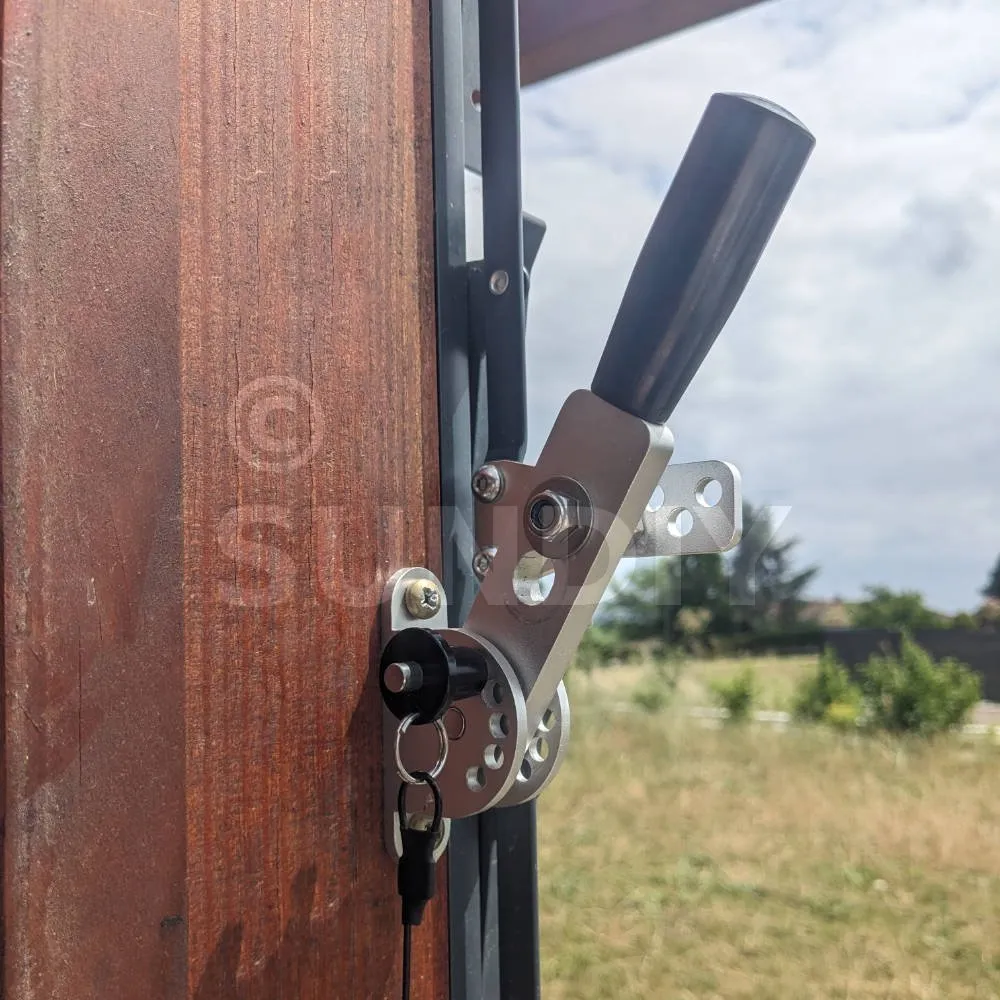
- with the Blade Locker actuator, the mechanism is positioned flush on the Blade Locker side and up to 20mm inside the supporting beam.
Fixing the first mechanism
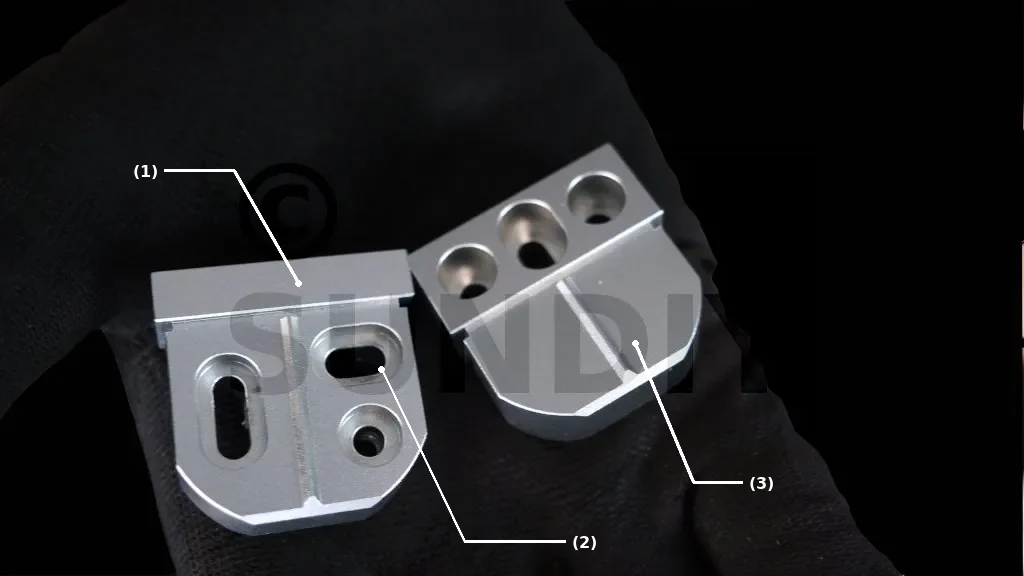
The stops provide an impeccable finish as well as locking the mechanisms at the ends.
Warning: two types of end stops:
- with the start stop (1), the fixing holes (2) are concealed when the mechanism is in place,
- with the end stop (3), the fixing holes remain visible.
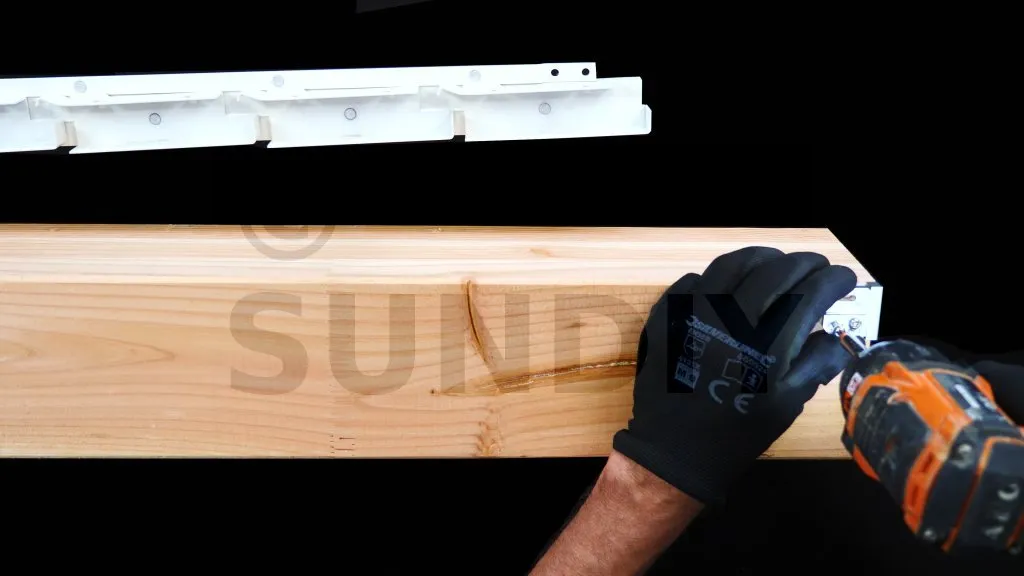
It positions the mechanism at the ideal distance from the edge. Fix using screws suitable for the support.
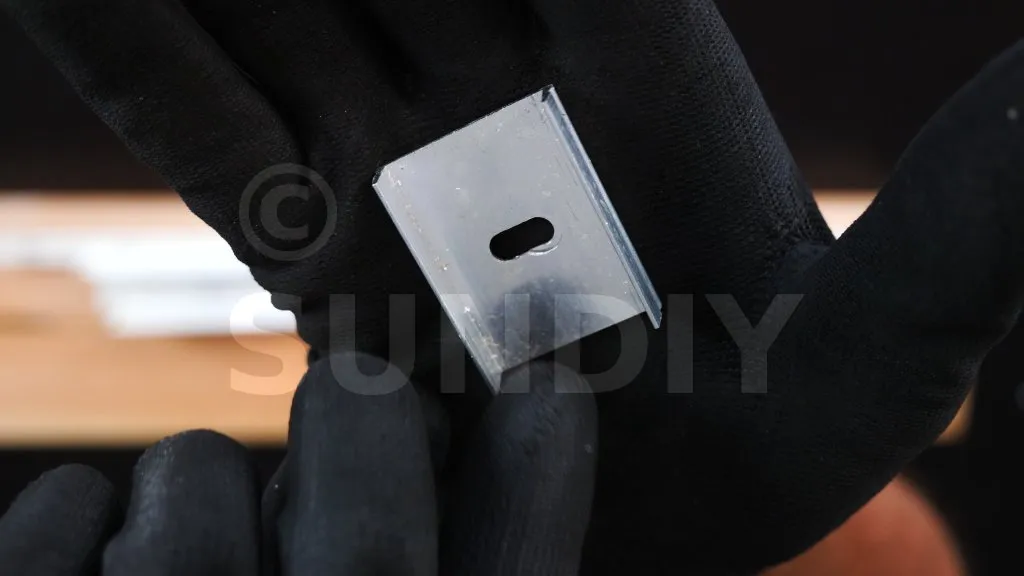
The mechanism is fixed using concealed fixing clips. Use a fixing screw depending on the support:
- wood screws on a timber beam,
- self-tapping sheet-metal screws for steel or aluminium support,
- concrete anchor screw, hammer-in plug, or expansion plug for masonry support.
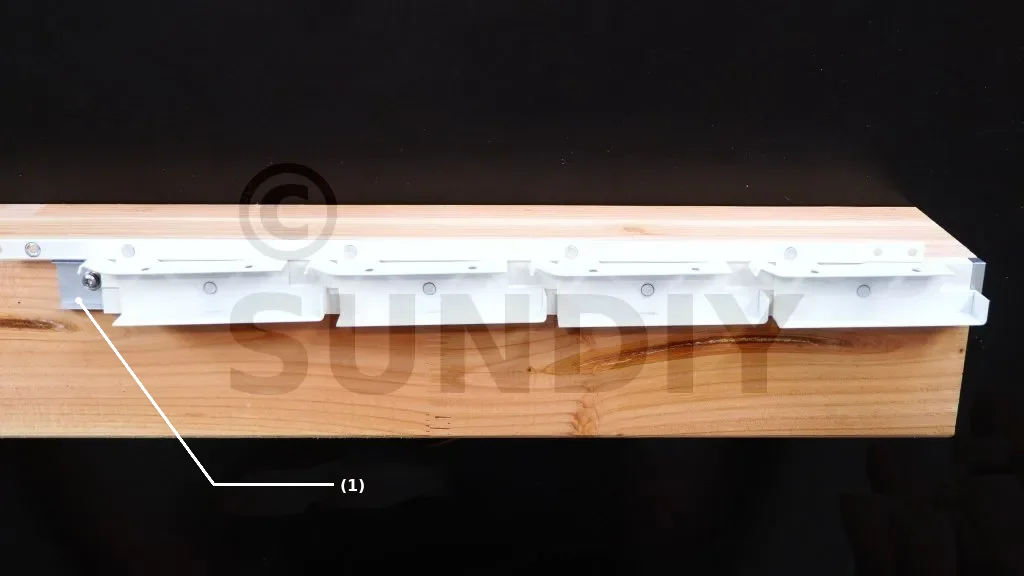
With the mechanism in place on the start stop, position a 1st clip (1) at the end of the mechanism body, leaving it protruding so it can be screwed and used to fix the next mechanism. The clip’s slotted hole allows vertical adjustment.
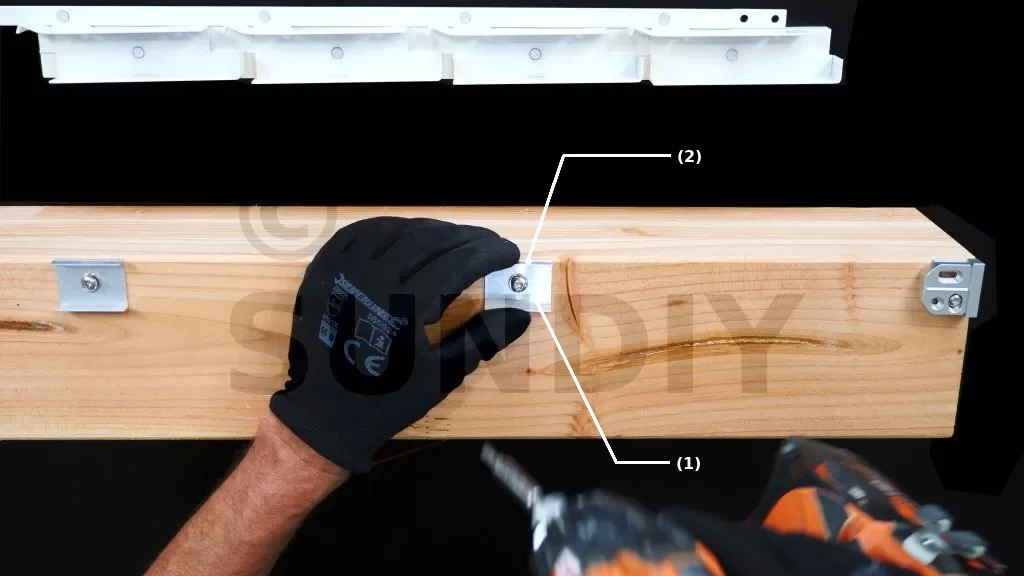
The central clip (1) is REQUIRED if any of the following conditions are met:
- aluminium blades longer than 2m,
- WOOD blades longer than 1m,
- in mountainous or windy areas,
- for the first mechanisms transmitting the force from the actuation device.
In other cases, the central clip is optional but recommended.
Discreetly mark (2) the position of the central clip for step 8.
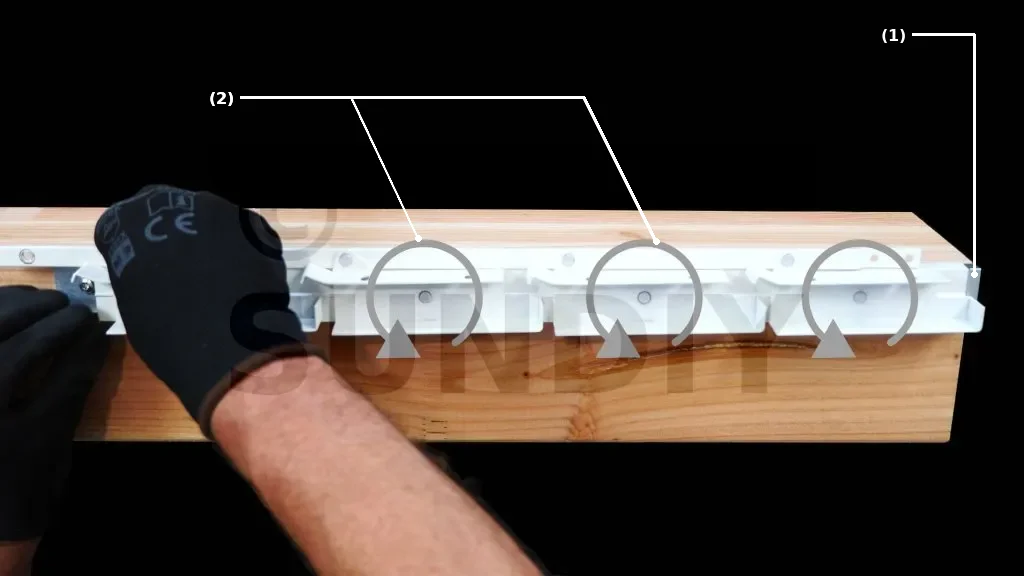
in firmly against the start stop (1). Check the vertical alignment in relation to the top face of the beam in the photo. Readjust if necessary. At the beginning, the mechanism may be a little “stiff”. Rotate (2) the blade carriers several times to start running them in.
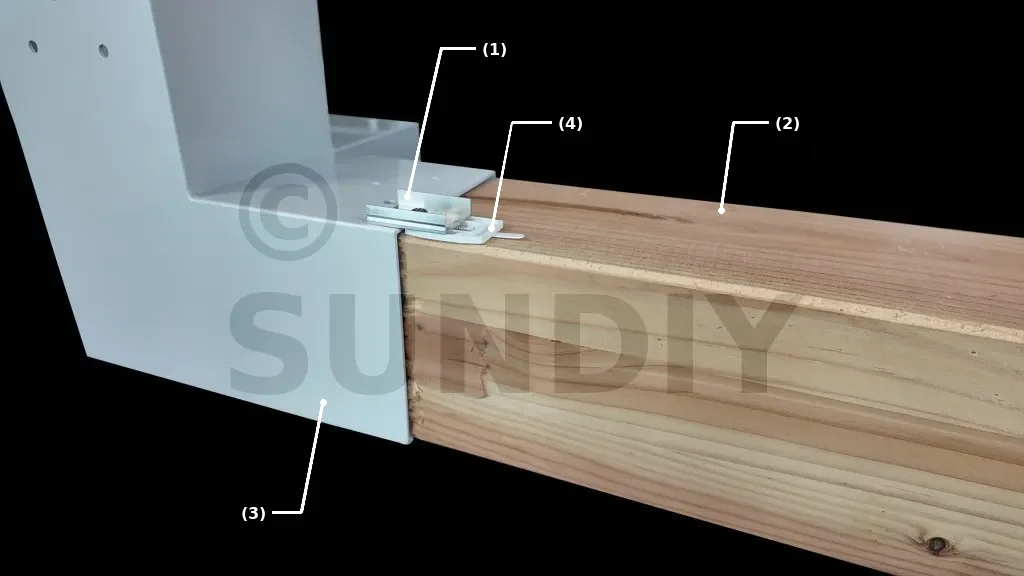
The first clip (1) must be fixed straddling the timber post (2) and the pergola connector (3). To compensate for the difference in thickness, insert a 3mm shim (4) between the clip and the timber post. On the next clip, insert a 2mm shim, then a 1mm shim on the following clip.
Fixing the subsequent mechanisms
WARNING: it is important to follow the method to ensure correct alignment of all the blades.
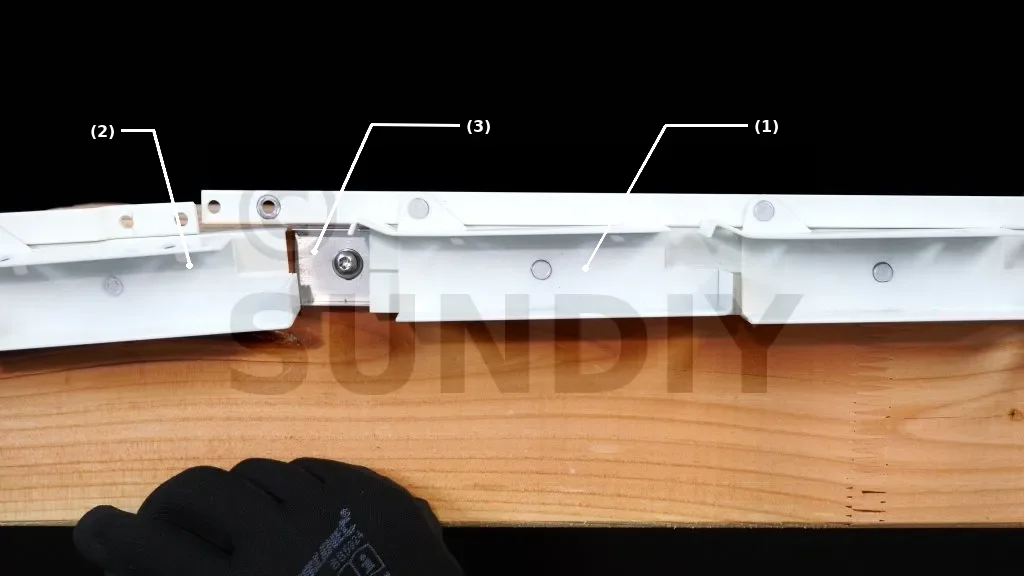
With the 1st mechanism (1) in place, position and clip the 2nd mechanism (2) onto the shared clip (3).
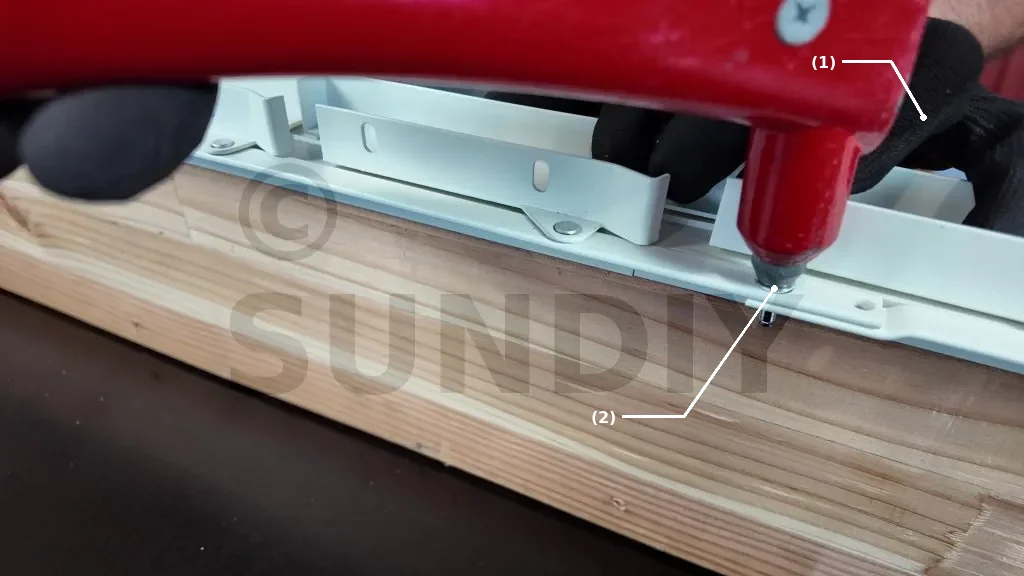
- By hand (1), hold the two mechanisms firmly in the closed position. The blade carriers must point slightly downwards.
- Assemble the two connecting rods with a rivet (2) (as in the photo) or a bolt.
Initially, install only one fastener for the two. The 2nd fastener will be fitted later if all blades are correctly aligned in the closed position AND once all mechanisms are in place.
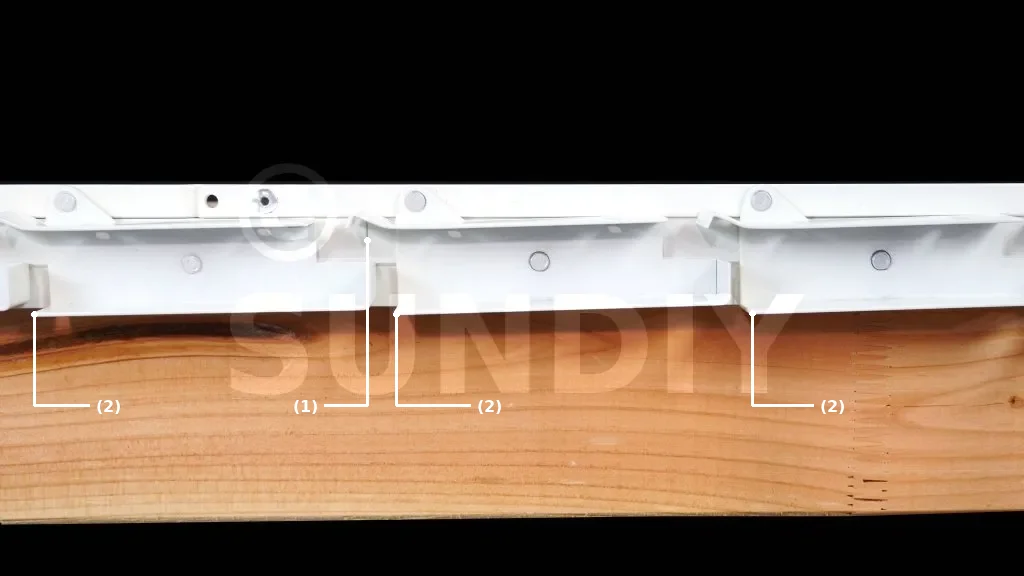
Depending on ambient temperature and installation conditions, it may be necessary to leave a slight gap (1) between the mechanisms in order to obtain perfect blade alignment. In the closed position, the blades must point slightly downwards (2).
(Top view photo)
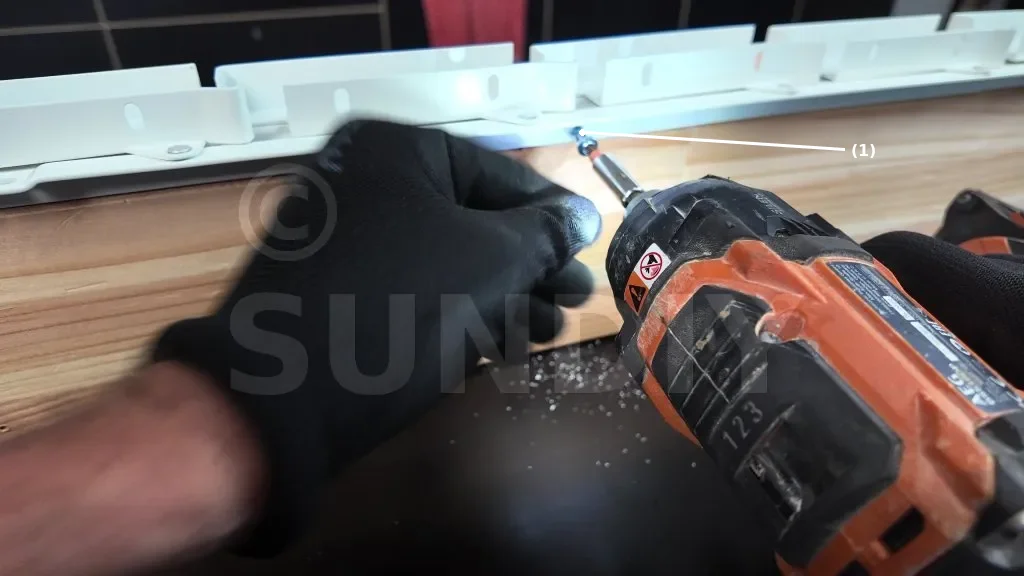
To maintain positioning and improve retention of the mechanisms, it is recommended to fasten (1) the mechanism to its central clip from above using a sheet-metal screw. The marking made in step 4 makes it possible to locate the position of the central clip.
This recommendation becomes a REQUIREMENT in the following cases:
- aluminium blades longer than 2m,
- WOOD blades longer than 1m,
- in mountainous or windy areas,
- for the first mechanisms transmitting the force from the actuation device.
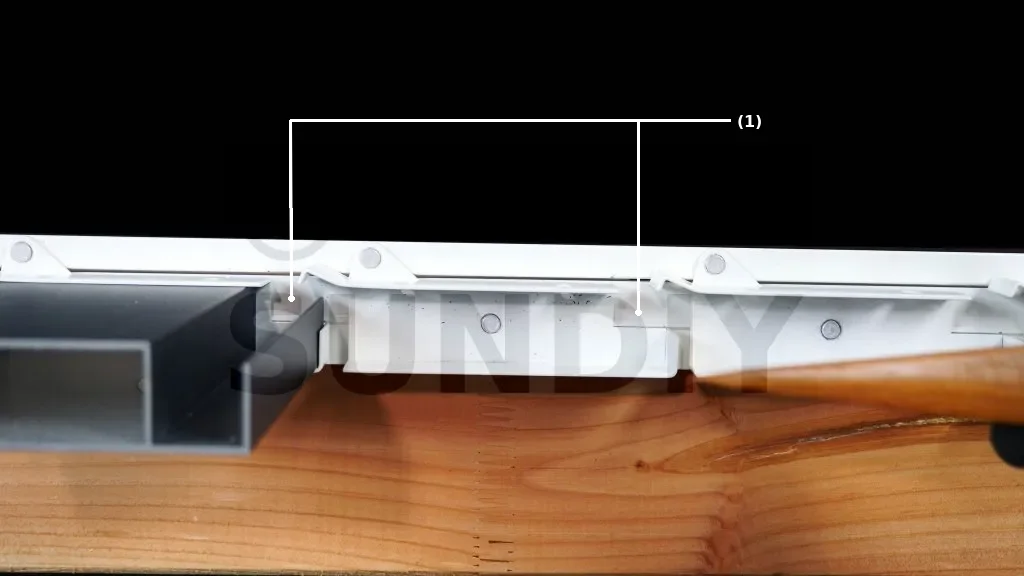
For aluminium blades, the fixing reinforcement can be positioned laterally, at the level of the blade gutter volume (1). Use a round-head screw, suitable for the support.
Alternative not recommended for WOOD blades, which may bind on the screw head.
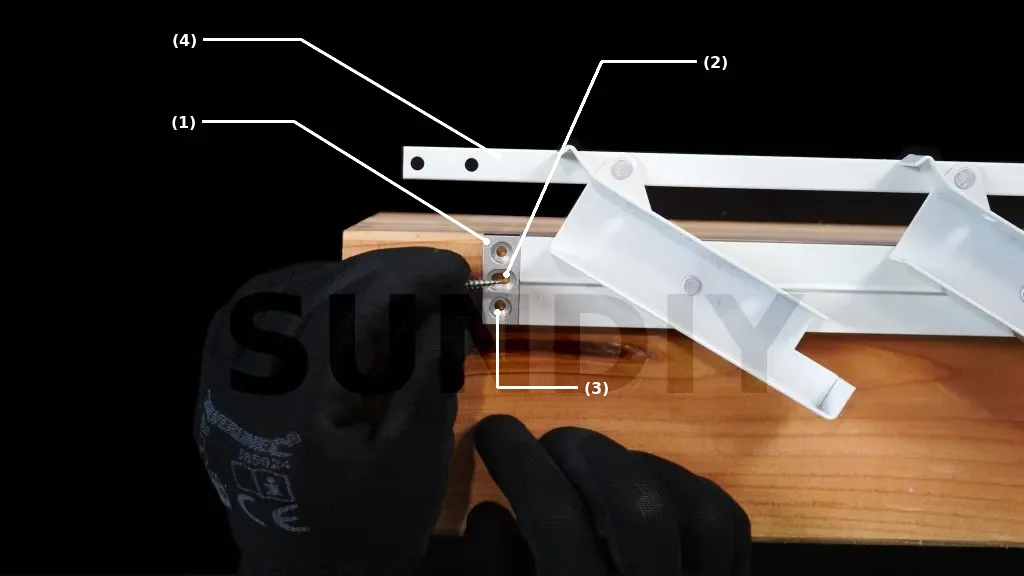
Place the end stop (1) firmly against the last mechanism. Then screw into the slotted hole (2), and finally screw through the other two holes (3). Cut the connecting rod (4) if it prevents the mechanism from closing.
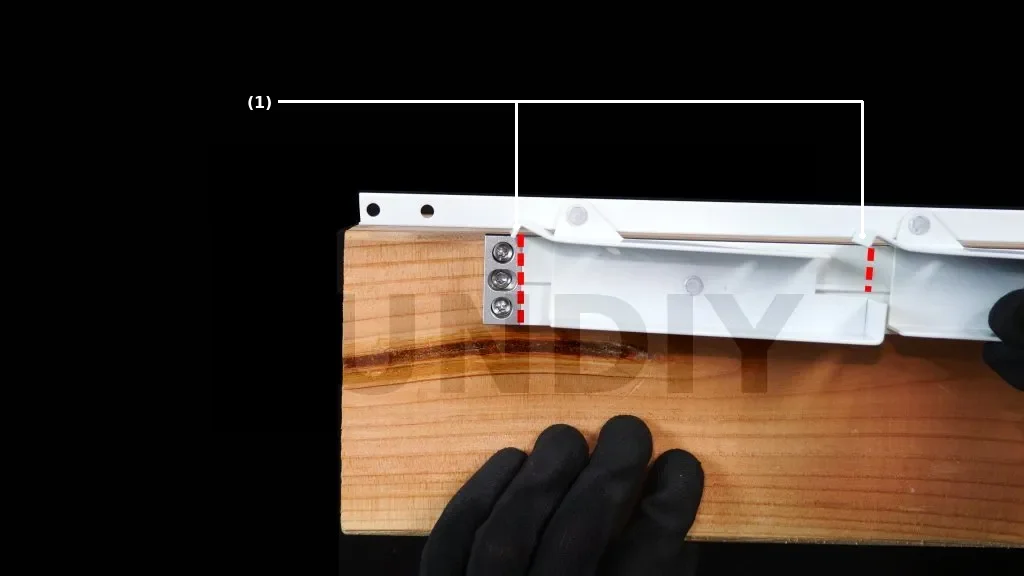
Cut the mechanism body at the 90° angle of the blade carrier upstand (1). The remaining piece of mechanism can be used to start the next bay.
Obviously, the mechanism must be cut before fixing the end stop.
Continue on the next line of the bay, in mirror-image arrangement.

